Value engineering is a "thug"

Are you tired of "value engineering" beating up your designs?
After you have spent so much time putting together a solid design foundation that leads to a very nice appropriate design solution you are informed you have gone over budget. You have two inches of drawings sitting on the table rationalizing how you would execute your designs and now you must at this late stage back peddle. You try and justify why the design needs to remain as is and why the owners leadership team needs to expand their thinking rationalizing the design deserves the additional investment. The answer comes back "NO". Ideas to simplify the design are fruitless and then the leadership team throws your solution into the arena with the value engineering gladiator thugs who have arrived. When they have finished you see little value and and little to no engineering. Your design gets torn this way and that losing some or all of it's integrity to satisfy the absolute budget on the table. This sad process is all too common. It has become clear to you the leadership team likes their money more than your designs and this brutal fact has become a professional disappointment to you as the designer.
Enter the "flashbox"
A “flashbox” is a newly developed building block for studying construction projects in their very early conceptual "dreamy" stage to bring accuracy and reality to the dream without the requirement of expensive extensive drawings. Once created this building block can be used as a framework to manage the direction and satisfy the rest of your projects objectives and expectations.

The basis of this technique is to have a computer create all the ingredients for you required by a room to satisfy its fundamental function. If you walk into a room and look around everything you see and a few things you cannot would be included within this building block.
"The rubber pre-design tool"
How do you do this? You need to create an almost “rubber estimating tool”. This tool takes and integrates all the design formulas together such that as you make one decision it changes all other integrated decisions. This tool thus ties parametrically all architectural and engineering formulas together to create a whole. We use this type of tool to create this fully pre-engineered and pre-priced building block and have given this building block the nickname “flashbox”.
"The parametric engine"
A parametric engine is simply a method of linking all of the design decisions of the AESLAGID ten primary design disciplines together such that you have linked the results of the primary formulas used to calculate data. Once this model has been assembled it acts as a single very rubber tool.
The following is how the parametric engine works and this can be created simply using excel as your software program of choice.
The engineered "quantities"
Thru a simple dashboard you can decide the length, width, and height of the room in question and the model will run off the volumetric of the room. It will produce for you the areas of the walls, floors and ceilings both finished and not. It will produce the room perimeters and volume. If windows and doors are required as is usually the case or you can't get into the room or see out, the model will subtract the fenestration areas out of the walls and recalibrate.

Select the foot-candles of lighting desired and the model will run the values through a lighting calculator and based on the lumens required to drive the fixture have the calculator determine the number of light fixtures required. It will place the lights evenly in the ceiling and determine the amount of wire required to hookup the lights and it will put a switch on the wall and a breaker in the panel.
The model then automatically takes the heat off the lights and adds it to the heat off the people and off the other heat producing elements within the room and engineers the cooling required by using an hvac cooling load calculator. The btuhs calculated will determine the amount of air in cfms that must be distributed throughout the room to satisfy this load requirement. The dashboard can add the requirements of specialized hvac zoning along with other control elements necessary to make the room sense and think about desired temperatures and humidities that must be maintained.
With the cfm calculation the model will size the ductwork required, calculate it's weight and disperse necessary supply air and return air diffusers.
In a similar manner we handle the requirement of sprinkler heads
Introduce the marketplace "the qualities"

Now that we have all of the quantities of materials for the room we can apply market driven qualities. We have created unit price cost libraries that deal with current day pricing based on specific market available products and specifications. The nice part about this is we do not need to concern ourselves with historic pricing that is general and loose. This level of pricing really tunes our budgets closely as they are market driven and based on pricing today not something similar and historically perhaps years old. The guesswork is taken out of the project.
Since often during early stage planning rooms are added and removed at a whim it is convenient to include in each of these flashbox costs that of the design team, general conditions, general contractor fee, a contingency if desired and escalation if you chose to buy the project in the future. This way you are studying the true cost of the flashbox to the project.
If we were to eliminate or add a room to the project you also take into consideration the fact that you do or do not require the design and construction professionals to deliver it to you. Thus you have created a truer cost and made things far simpler.
"Choices are yours"
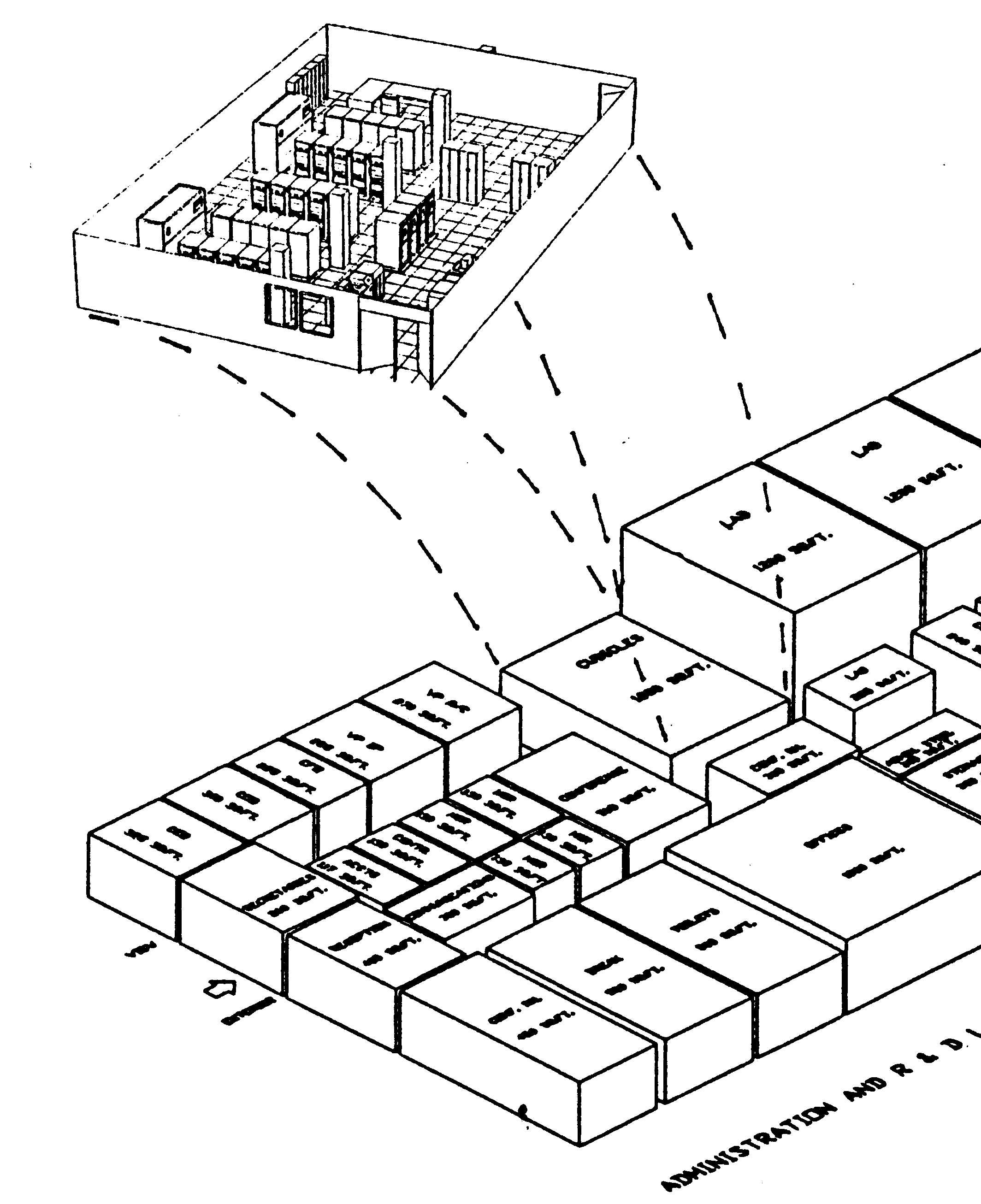
When the model drives out fully engineered cost solutions, we like to see a variety of choices. The model has the power to drive out multiple levels of choice in engineering levels and cost finish levels at a time. We chose to carry three columns to store the results creating a low, medium, and high option to select from. This is not guesswork these are calculated quantities and qualities of choice.
If you find little value in a room you would likely choose the low end option or if you see enormous value in the room you might select the high end option, or if the room is no longer worthy you simply dump the room from the project.
Another benefit is regarding cost the model does not care where you place the room in the project as that gets resolved during the design phase. The only thing the model cares about is whether the room is in the project or not.
Even though you could create more than three options we choose to run three levels of options typically to check the extremes you can drive the room to. This is very helpful during planning and the beauty is this method does not rely on a resolved drawing it only relies on an area program of rooms you are considering placing into the project.
"You become the true director"
We tend to carry a collector column for decisions we make which we call the "director’s cut" as our clients become the projects director. This is where you store your option scenarios for your study.
"cool huh"
This engine is the basis that drives our "Art of the Start" master planning studies. Add a few diagrams to give your project life and a few timelines and you have the makings of an entire study that is stable, dependable and bridges the "Genesis hole". See my blog to learn about the hole most project teams fall into.
"The power is yours"
When you get this much information at the onset of a project and tie it down with a strong project team you have the makings of a successful project. The benefit to you is this type of system can impact your overall project direction and cost by 30%.
End of blog


Perfect, Mr. Daniel . The initial cost of vision is numbing. Only the cost of vision in the life cycle , which will be supported by performance while using ensure the appreciation of design. Value Engineering by definition must always be used when project from scratch in the creation of meaning, when one needs identification , and when two in the concept definition. Cost reduction on a project already developed is not value engineering but cost reduction, even if you use something of value engineering methodology , completely misrepresenting the meaning of value in the life cycle and unfortunately equating it to the meaning of cost initial.
See the following definition of American Institute of Architects (AIA) – “Value Engineering is not just a cost-cutting tool. The cost savings promote results that reduce the quality and functionality. The Value Engineering is an organized effort , focused on proposing alternatives for achieve lower cost in the life cycle, consistent with performance requirements, reliability, quality and aesthetics.”
Sorry, but the value engineering only have harmful effect if misapplied and who is not prepared to use this powerful methodology