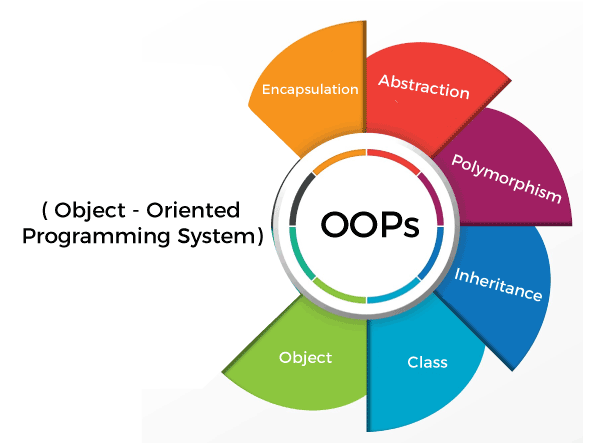
What Is Object-oriented programming
Object-oriented programming (OOP) is a programming paradigm that is based on the concept of "objects", which can contain data and code that manipulates that data. OOP is one of the most popular programming paradigms in use today, and it is the basis for many modern programming languages, including Java, C++, and Python.
In OOP, an object is a self-contained unit that contains both data and code. The data is stored in fields, also known as properties or attributes, and the code is stored in methods. An object's data and methods are closely related, and they work together to represent a real-world entity or concept.
One of the key features of OOP is encapsulation, which is the process of hiding an object's implementation details from the rest of the program. Encapsulation allows objects to be used without the need to know how they are implemented. This makes it easy to change the implementation of an object without affecting the rest of the program.
Another important feature of OOP is inheritance, which allows objects to inherit properties and methods from other objects. This allows for code reuse and makes it easy to create new objects that are similar to existing ones. For example, a "Car" class could inherit from a more general "Vehicle" class, inheriting common properties and methods such as "drive" and "stop".
Recommended by LinkedIn
Polymorphism is the ability of objects to take on multiple forms. In OOP, polymorphism allows an object to be used in different ways, depending on the context in which it is used. For example, a "shape" object could be used to represent a circle, a square, or a triangle, depending on the context.
OOP allows developers to build complex, reusable software systems that are easy to understand, modify and maintain. It also promotes code reusability and makes it easy to add new features and fix bugs. However, it also has some downsides like increased complexity and higher memory usage.
In conclusion, Object-Oriented Programming (OOP) is a programming paradigm that utilizes objects, encapsulation, inheritance, and polymorphism to create complex and maintainable software systems. It is widely used and is the basis for many modern programming languages. OOP offers many benefits, but it also has some downsides and it's important to choose the right paradigm for the job.