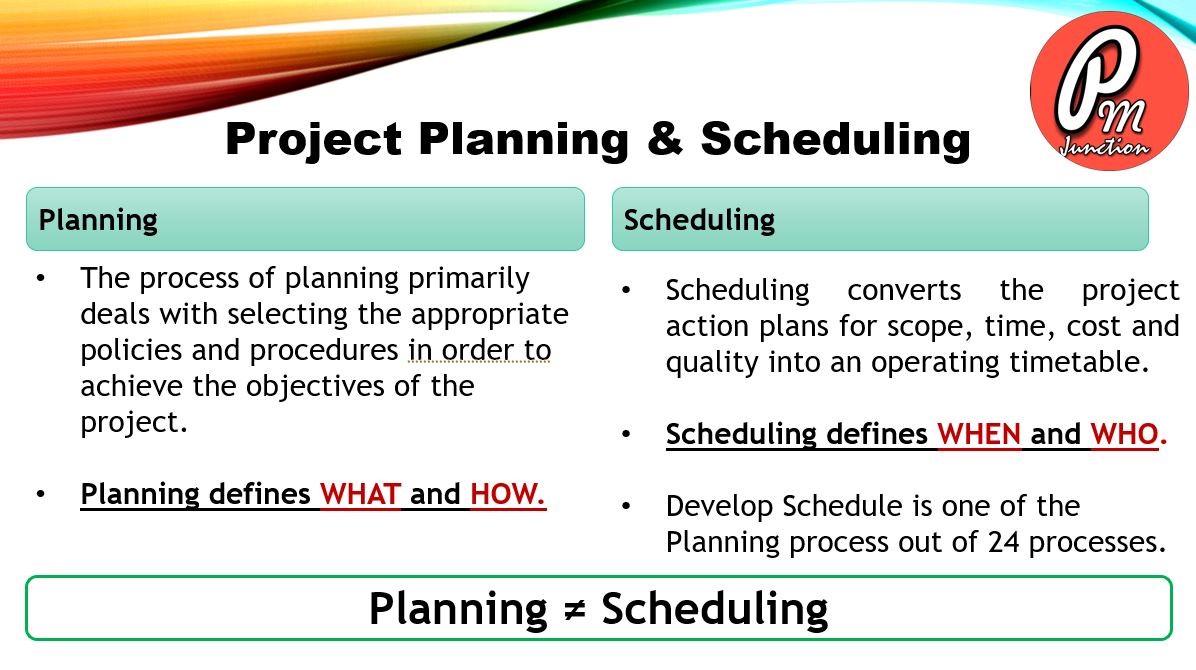
Navigating Projects: Understanding the Difference Between Planning and Scheduling
Introduction: Embarking on a project is akin to setting sail on a voyage; it requires careful navigation, meticulous preparation, and a well-charted course. Central to this journey are two fundamental components: Project Planning and Scheduling. While these terms are often used interchangeably, they represent distinct yet interrelated aspects of project management. In this blog, we'll delve into the difference between project planning and scheduling, exploring their unique roles and contributions to successful project execution.
Understanding Project Planning: Project planning lays the foundation for the entire project lifecycle. It involves a comprehensive process of defining project objectives, identifying deliverables, outlining tasks, allocating resources, and establishing timelines. At its core, project planning answers the "what," "why," and "how" of the project, setting the strategic direction and guiding principles that shape its execution. Key components of project planning include:
Project planning serves as a roadmap, guiding project teams through the various stages of project execution while providing a framework for decision-making and course correction.
Unraveling Project Scheduling: Project scheduling, on the other hand, zooms in on the temporal aspect of project management, translating the project plan into a detailed timeline of activities and milestones. It involves sequencing tasks, estimating durations, assigning dependencies, and creating a project schedule that delineates when each activity will be performed. Key elements of project scheduling include:
Recommended by LinkedIn
Project scheduling transforms the abstract project plan into a tangible timeline, providing a roadmap for day-to-day execution and enabling project teams to track progress, manage dependencies, and meet deadlines effectively.
Bridging the Gap: While project planning and scheduling serve distinct purposes, they are deeply interconnected and mutually reinforcing. Effective project planning lays the groundwork for accurate scheduling by defining project scope, identifying dependencies, and allocating resources. Conversely, meticulous scheduling ensures that project plans are translated into actionable timelines, facilitating resource management, progress tracking, and timely delivery.
Conclusion: In the dynamic landscape of project management, mastering the nuances of project planning and scheduling is essential for steering projects toward success. By understanding the difference between these two pillars of project management and leveraging their complementary strengths, organizations can navigate through complexities, mitigate risks, and achieve their project objectives with confidence. Just as a skilled navigator charts the course for a smooth voyage, adept project managers harmonize planning and scheduling to guide projects toward their destination, overcoming challenges and seizing opportunities along the way.


24 processess ???