Lambda Tip - Maximizing Performance and Scalability with AWS Lambda and Python
AWS Lambda provides a flexible and scalable solution for running your code in the cloud, but it's important to consider performance and scalability when designing your application. In this article, we'll explore some best practices for maximizing performance and scalability with AWS Lambda and Python.
First, it's important to optimize your function code. This means that you should write efficient and well-optimized code, and avoid using any unnecessary libraries or dependencies. You should also ensure that your code is well-structured and easy to maintain.
Second, you should use the appropriate resources when deploying your function. This includes the amount of memory and the number of vCPUs, as well as the timeout and the number of retries. You should monitor the resource utilization of your function, and adjust the resources accordingly to ensure that your function runs optimally.
Another important factor for performance and scalability is the use of connection pooling. When connecting to databases or other services, it's common to open and close a new connection for each request. This can be slow and inefficient, especially for high-volume applications. By using connection pooling, you can reuse existing connections, which can significantly improve the performance and scalability of your application.
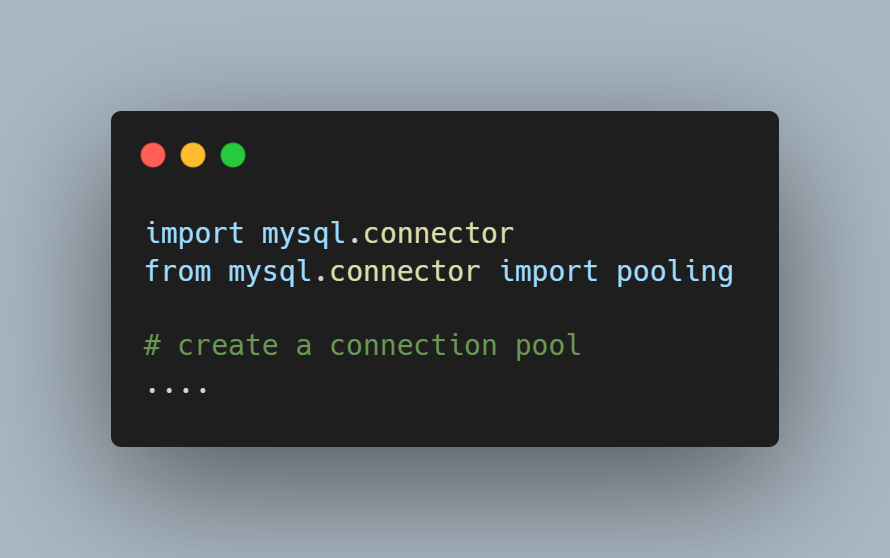
Here's an example of how you can use connection pooling in Python:
Recommended by LinkedIn
In this example, we create a connection pool using the mysql.connector.pooling.MySQLConnectionPool class. We provide the connection details, such as the host, user, password, and database name, as well as the pool name and pool size.
In the lambda_handler function, we get a connection from the pool using the conn_pool.get_connection() method. This connection can be used to perform database operations, such as executing SQL queries and fetching results.
Once we're done with the database operations, we return the result and close the connection. It's important to close the connection and the pool when they're no longer needed, to avoid running out of connections and to ensure that resources are freed.
In conclusion, using connection pooling with AWS Lambda and Python can help you achieve better performance and scalability. By reusing existing connections, you can reduce the overhead of opening and closing connections, and ensure that your application can handle high-volume traffic. Try it out in your next project and see the results!


