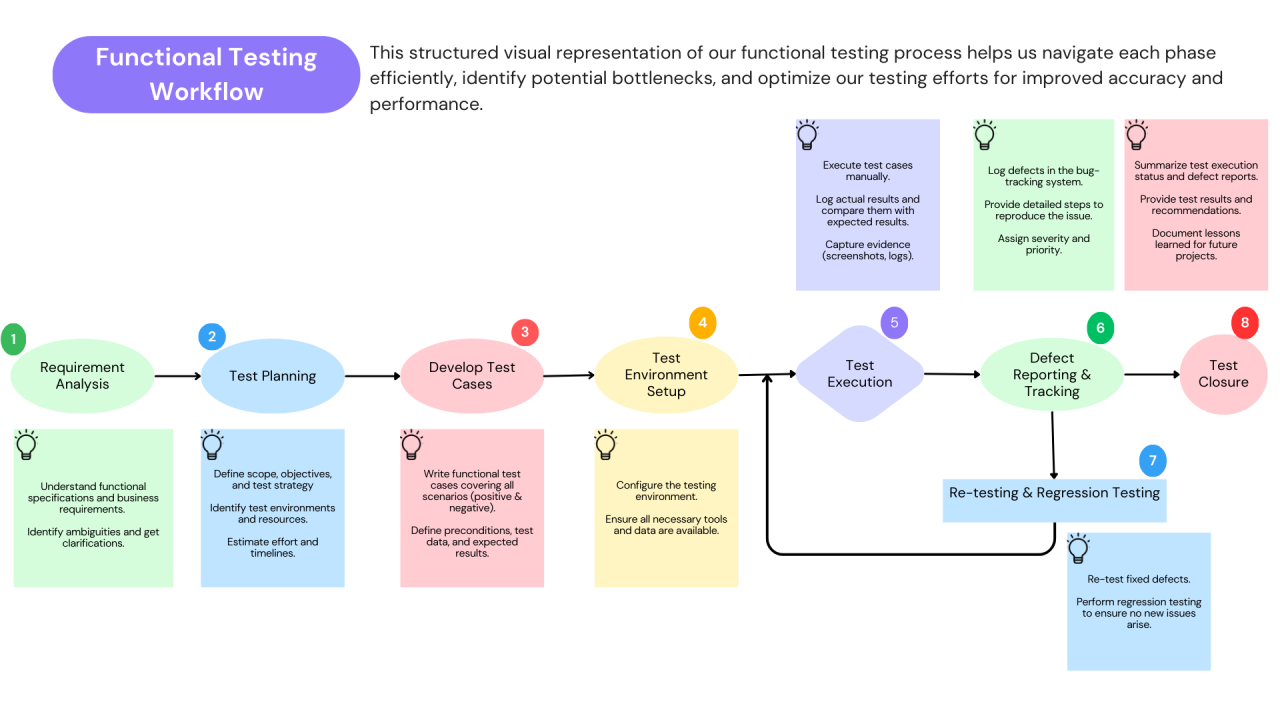
Functional Testing Workflow: A Roadmap to Software Quality
In the world of software development, functional testing plays a crucial role in ensuring that applications meet business requirements and user expectations. A well-defined Functional Testing Workflow helps teams streamline their testing efforts, identify potential roadblocks, and deliver high-quality software efficiently.
Understanding Functional Testing
Functional testing is a type of software testing that validates whether the application functions as expected. It focuses on testing the software’s features against predefined specifications and requirements, ensuring that all components work correctly.
Key Phases of the Functional Testing Workflow
A structured approach to functional testing consists of several key phases:
1. Requirement Analysis
2. Test Planning & Strategy
3. Test Case Design & Development
4. Test Environment Setup
Recommended by LinkedIn
5. Test Execution
6. Defect Reporting & Retesting
7. Regression Testing
8. Test Closure & Reporting
Best Practices for an Effective Functional Testing Workflow
Final Thoughts
A well-structured Functional Testing Workflow is essential for delivering reliable and high-performing software. By following a systematic approach, teams can optimize their testing efforts, enhance software quality, and improve user satisfaction.


