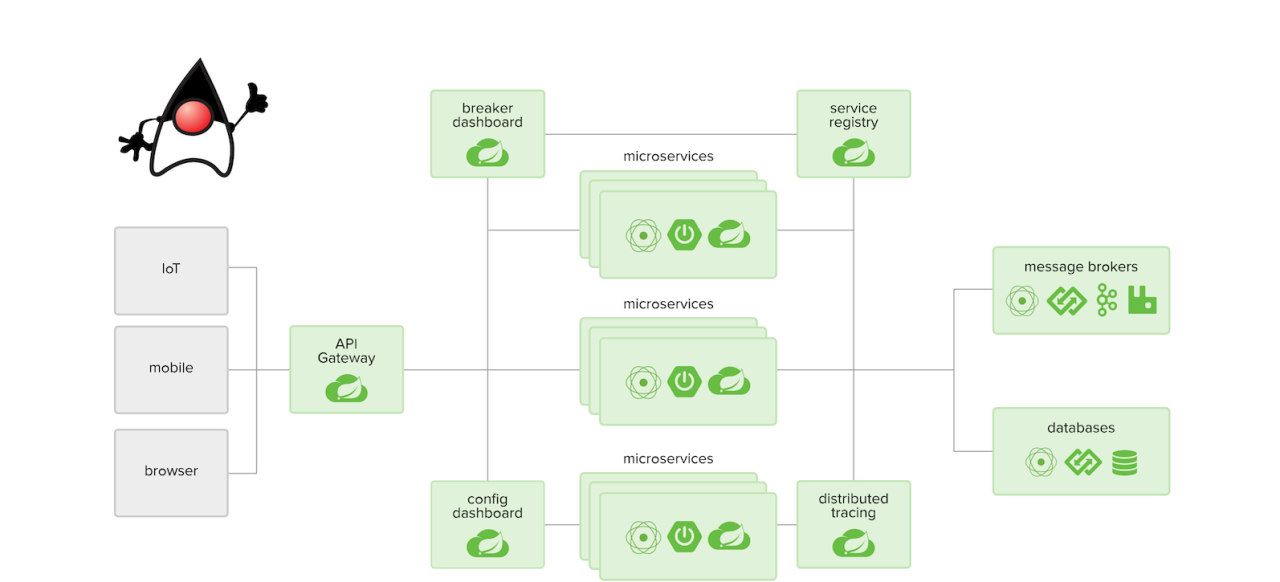
Choosing the Right Database for Java Microservice Applications and Why MS SQL Might Not Be the Best Choice for many.

Choosing the Right Database for Java Microservice Applications and Why MS SQL Might Not Be the Best Choice for many.

Introduction

In the world of Java microservice application development, selecting the appropriate database is crucial for achieving optimal performance, scalability, and efficiency.

While there are various options available, it is essential to consider the specific requirements of your application before making a decision.

We will explore the factors to consider when choosing a database for Java microservice applications and highlights why MS SQL may not always be the best fit for many such applications.


Factors to Consider when Choosing a Database

Performance

  • Latency: The database's response time plays a vital role in maintaining optimal performance for microservice applications that require fast and frequent data access.
  • Scalability: As microservices are designed to be independently scalable, the chosen database should support horizontal scalability to handle increasing workloads efficiently.

Data Model Flexibility

  • Schema-less or schema-flexible databases provide agility in the evolving microservice ecosystem, allowing developers to iterate and deploy changes without rigid schema constraints.

Integration and Ecosystem

  • Availability of robust libraries, frameworks, and tools that seamlessly integrate with the chosen database enhances developer productivity and simplifies the implementation of microservice architectures.


Why MS SQL May Not Be the Best Choice

Licensing Costs

  • Microsoft SQL Server (MS SQL) is a commercial database management system that involves significant licensing costs.
  • For small-scale or budget-constrained projects, this might be a limiting factor.

Scalability Limitations

  • MS SQL's scalability can be a concern when dealing with highly distributed and horizontally scalable microservice architectures.
  • Its architecture is primarily designed for vertical scaling, which may restrict seamless expansion.

Data Model Flexibility

  • MS SQL follows a relational data model, which enforces strict schema constraints.
  • For microservice applications with rapidly evolving data models, this rigid structure can become a hindrance.

Integration and Ecosystem

  • While MS SQL offers solid integration with the Java ecosystem through JDBC drivers, it may not have the same level of community support, libraries, and frameworks as some other databases, limiting developer options and productivity.


Alternatives to Consider

  •  MongoDB

MongoDB, a NoSQL document-oriented database, provides schema flexibility, horizontal scalability, and excellent performance for Java microservice applications.

Its JSON-like document model aligns well with object-oriented programming paradigms.

  • Apache Cassandra

Apache Cassandra, a distributed NoSQL database, is built for scalability and fault-tolerance. It offers high write and read throughput, making it suitable for applications with heavy write workloads or high data availability requirements.

  • PostgreSQL

PostgreSQL, an open-source relational database, provides strong ACID compliance, scalability, and support for JSON data types.

It offers a rich set of features and enjoys strong community support.


Conclusion

Choosing the right database is critical for Java microservice applications to ensure optimal performance, scalability, and data model flexibility.

While MS SQL is a robust and widely used database management system, its licensing costs, scalability limitations, rigid data model, and potential ecosystem constraints may make it less suitable for many microservice applications.

Exploring alternatives like MongoDB, Apache Cassandra, and PostgreSQL can provide developers with greater flexibility, scalability, and compatibility with the Java ecosystem.


References

  1. Berman, L., & Paul, J. (2017). The Microservices Playbook. O'Reilly Media.
  2. Newman, S. (2015). Building Microservices: Designing Fine-Grained Systems. O'Reilly Media.
  3. Oancea, D. (2019). Microservices in Action with Examples in Java. Manning Publications.
  4. MongoDB. (n.d.). Retrieved from https://www.mongodb.com/
  5. Apache Cassandra. (n.d.). Retrieved from https://cassandra.apache.org/
  6. PostgreSQL. (n.d.). Retrieved from https://www.postgresql.org/
  7. Amazon DynamoDB. (n.d.). Retrieved from https://aws.amazon.com/dynamodb/
  8. Redis. (n.d.). Retrieved from https://redis.io/
  9. Apache Kafka. (n.d.). Retrieved from https://kafka.apache.org/
  10. Chhabria, A. (2021). Mastering Microservices with Java. Packt Publishing


To view or add a comment, sign in

Others also viewed

Explore content categories